
The Reverse Pitch
Finding the why behind a meeting request
Happy Thursday, 👋
Most founder meetings with investors follow a familiar rhythm. Start with a bit of small talk, move onto introductions, spend 10 to 20 minutes walking through the deck, then open the floor for questions. Sometimes investors interrupt along the way or wait until the end. Either way, the structure is usually the same.
There is nothing inherently wrong with that cadence. It keeps the meeting organized and gives both sides a reliable script. But once a company is past the first conversation, the standard format can start to work against the founder.
Why This Meeting Happened
By the time a founder is invited into a longer investor meeting, something has sparked a level of interest. It might be the size of the market, the pace of growth, the credibility of the team, a customer reference, or one detail in the deck that made the business feel more real than the average pitch. Investors do not always say this directly. More often the message is a polite variation of, “we would like to learn more.”
Founders should hear the signal inside that sentence. Investors review hundreds of companies every year. If they are taking another meeting, they are not starting from zero. The question founders should be thinking about is not whether there is interest but what kind of interest.
An investor leaning in on market size needs a different conversation than one who likes the traction but worries about repeatability. Another may be focused on sales efficiency, product differentiation, pricing power, or whether early demand is being driven by founder hustle rather than a repeatable engine. Each of those concerns points to a different path toward conviction.
If every meeting starts to feel like a replay of the same deck, it is usually a sign the founder is answering the generic version of the meeting rather than the real one.
The Reverse Pitch
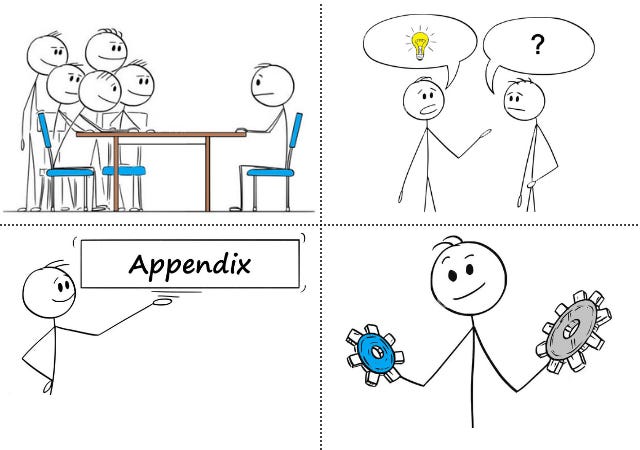
This is where a reverse pitch becomes useful. After introductions, instead of immediately opening the deck and starting on slide one, the founder can ask a simple question: what stood out enough that you wanted to take this meeting? Or even more directly: which part of the business would be most helpful for us to spend time on today?
That question does more than save time. It gives the founder a live read on how the investor is framing the opportunity. It shifts the meeting from presentation mode to conversation mode. And it helps allocate time toward the issue most likely to move conviction instead of spending 15 minutes on material the investor may already understand.
Used well, this approach sharpens the company’s narrative. Founders still need to communicate the core story: why this market matters, why this team is right for the problem, what the early traction proves, and what the business can become. The difference is that the order and depth can become more responsive to the investor in the room.
This tends to work best in second meetings or any conversation that follows real diligence. It’s at this point investors have moved past the broader overview and focused on what reduces uncertainty around the investment. A founder who understands the specific uncertainty on the other side of the table is in a much better position to address it.
Even In a first meeting, a lighter version of the reverse pitch can help. A founder still leads with the overview while asking a quick prompt up front: “Before I jump in, was there anything in the deck or data room you wanted us to spend extra time on?” That small adjustment often improves the rest of the discussion without changing the structure of the meeting.
Great fundraising meetings are not memorized performances. They are working sessions where the founder helps an investor get comfortable underwriting the business.
Prepare for the Conversation
The challenge is a reverse pitch requires more preparation by the company. A founder cannot tailor a meeting well unless the team has already done the hard work of understanding the business beyond what fits in the core deck.
That is where the appendix matters. The main deck should tell the company story clearly and efficiently. The appendix should function like a toolbox. It is where founders can go deeper into key areas of the business depending on what the investor wants to unpack.
This is one of the quiet differences between a decent fundraise and a sharp one. The best founders do not treat the appendix as extra slides. They treat it as proof of command. In many cases, the appendix is as long or longer than the main deck. It’s how a founder handles the harder questions, not by how smoothly they narrate the first ten slides.
An organized appendix does more than answer questions. It also communicates discipline. When a founder can move from the high-level story to a specific chart on payback periods, customer retention, or implementation timelines without losing the thread, it signals a team that knows its business cold.
It also helps to keep a running list of investor questions. After a handful of meetings, patterns start to emerge. If multiple investors ask about sales efficiency, churn, pricing power, or onboarding timelines, that is not random. Those recurring questions are the market telling the company where conviction is still fragile. Good founders do not get annoyed by that pattern. They build for it.
Sometimes the reverse pitch goes nowhere. The investor says, “just give us the overview.” In that situation, walk through the overview. Then steer into the areas that have surfaced in prior meetings. Mention the one or two questions that keep coming up and address them proactively. Often this small pivot can turn a passive presentation into a much more useful conversation.
Final Thoughts
A clear deck still matters. A disciplined narrative still matters. Once an investor has raised their hand for a deeper conversation, the job is no longer to walk them through the same presentation a little more slowly.
The new job is finding the question behind the meeting. That is the real value of the reverse pitch. It helps founders understand where conviction is building, where uncertainty still sits, and what evidence is most likely to move the conversation forward. It also signals something important about the team: they are listening, they are prepared, and they can adapt without losing the plot.
In fundraising, founders do not win by getting through every slide. They win by helping investors leave with a clearer understanding of why the business works, why this team is equipped to build it, and why now is the right moment to lean in.
Wishing everyone a great weekend,
-Eric.