
Space
The next investment frontier?
Happy Thursday, 👋
Our discussion this week is focused on a few ideas and observations regarding the space industry. It has not been a sector we historically considered from an investment standpoint but more data continues to indicate a potential inflection point as rocket launch costs continue to decline and more technological crossover continues between space and terrestrial applications.
In 1981 the first Space Shuttle launch cost almost $80,000 per kg but marketed an inflection point by demonstrating a much different concept for space travel. The continued technological advancements have brought launch costs down to almost 0.2% of the original Shuttle cost, opening the space industry to a greater number of private companies and allowing venture capital to become a larger component of the ecosystem.
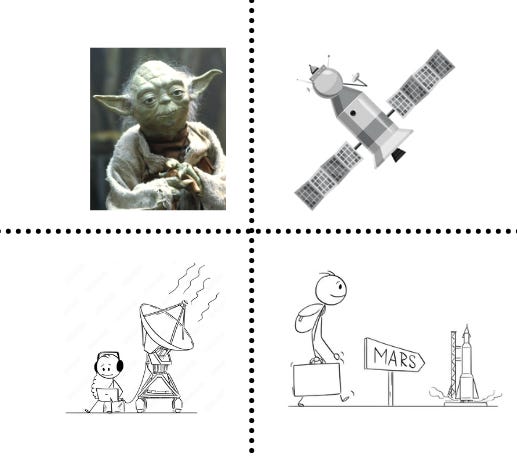
Last month we attended an Aerospace Investment Symposium which included speakers from NASA to Boeing. We then opened the latest Harvard Business Review to find an article titled “Your Company Needs a Space Strategy. Now”. As NASA moves closer to its mid-November Artemis launch, it’s an ideal time to consider Yoda’s words “Always in motion is the future”, so let’s take a closer look at the evolving space ecosystem.
Where It Started
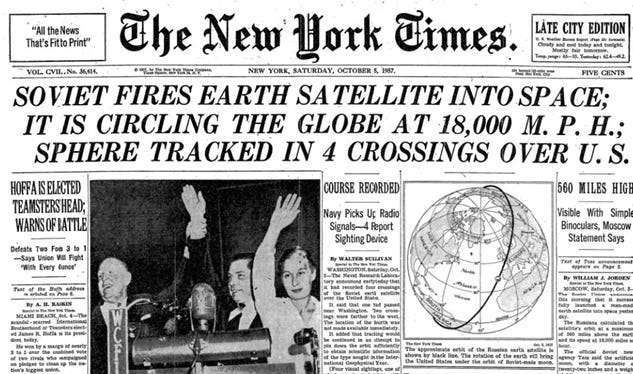
October 4, 1957 world headlines announced the first launch of an artificial satellite into space. Sputnik was smaller than a basketball but managed to stay in space for 22 days and orbit the Earth over 1,400 times. The launch began the race for the US to develop its own presence in space.
Private Markets Enter the Space Race
In the mid 1980’s President Reagan signed the Commercial Space Launch Act with mandated NASA begin encouraging private development of space flight to help offset the growing cost of the US government’s space budget. The 1984 Act opened the market for private companies to begin developing and launching satellites.
In 2004 President Bush built on Reagan’s actions by signing the Commercial Space Launch Amendments Act which established the legal framework for commercialization of human spaceflight. Several private companies began competing for the chance to launch the first private space flight, but the process took much longer than many expected. Over a decade later, SpaceX was successful with its 2020 Falcon 9 launch as the initial commercially developed crewed mission into orbit and to visit the International Space Station
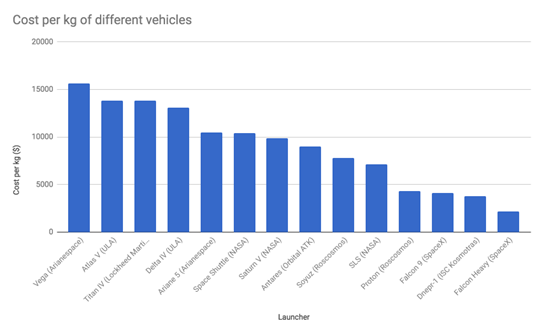
In 2025 SpaceX is targeting a human moon landing using its Starship craft, over 50 years since Gene Cernan was the last person to step off the surface of the moon during the Apollo 17 mission. The SpaceX flight is expected to cost less than $100 per kilogram, a fraction of the original moon mission.
Why Space?
The benefits of space technology may not be immediately evident but as we look closer at emerging technologies various applications begin to emerge which benefit those of us living on Earth. A few of these include the following:
🚗 Locational GPS Data. Several improvements have been made as a result of enhanced satellite technology and communications, including more advanced self-driving cars, better logistical systems, and increased accuracy of drones.
🛰 Global Transparency. Near real-time satellite imaging and improved resolution is increasing weather forecast accuracy, helping develop more specific insurance pricing, shortening response to natural disasters and reducing the spread of forest fires.
💻 Expanded Broadband. The reduced cost of launching satellites has allowed for expanded broadband access into areas where terrestrial antenna technology is not viable.
Size of the Space Economy
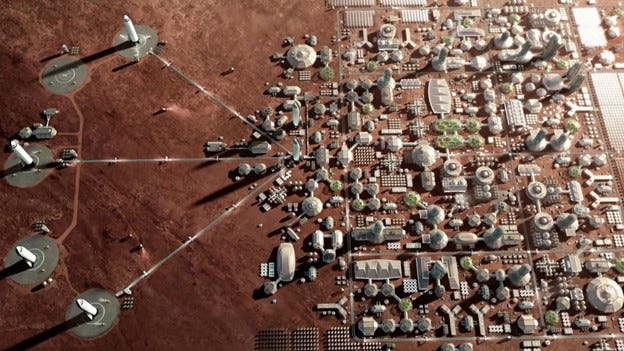
Although it may be a few years until we see an extensive Mars economy, the overall space economy is estimated at $500 billion and expected to reach $1 – 3 trillion by 2040. A significant increase is expected once the NASA Gateway project launch occurs in 2024 and begins the development of a space station orbiting the moon to provide staging for deep space exploration.
Pitchbook research indicates as of October 2022, a total of $6.2 billion of venture capital has been invested in space related companies, which matches the 2021 full year of activity. Since 2017 venture capital investments have increased almost 4x as the space industry has grown.
Areas We Are Watching
Narrowing down a few areas of focus is not easy but from a venture investment standpoint we believe the following may be worth watching over the next few years.
🚀 Launch Cost Decline
As the cost to launch into space declines, start-up companies will be able to test ideas more easily without significant upfront costs. Opening the environment to more cost effective experimentation should improve the number of successful technological developments and further expand the space economy.
🧠 Artificial Intelligence
Satellites and space travel generate a lot of data and as we travel farther from terrestrial base stations it becomes more difficult to transmit data back to Earth for processing and evaluation. Artificial Intelligence and Machine Learning will need to develop toward a point where multiple systems can communicate and make collective decisions without significant human interaction. An example is improved communication among satellites to avoid collisions or self-coordination of multiple surface rovers to map more areas on the surface of Mars.
🏭 Space Manufacturing
The vastness of space makes it difficult to quickly replace a broken tool on the surface of Mars or replicate a part on a space station. Manufacturing in space requires working with materials in a zero gravity environment and becomes increasingly necessary as we develop locations further from Earth.
🤝 Increased Industry Collaboration
The success of the space industry will require collaboration across all companies involved. Unlike prior industrial revolutions where companies would compete to announce product enhancements or gain market share, the space economy can only move forward when all companies work together.
An example of industry collaboration is NASA’s Technology Taxonomy indicating areas where the organization needs help overcoming technological challenges to continue improving future spaceflight. NASA’s Technology Transfer Program also maintains an open portfolio of licensable patents to encourage further develop of new technologies across multiple categories.
Exit Strategies
Financing emerging space companies allows investors to help teams push the boundaries of science and technology. As more technologies serve both terrestrial and interstellar customers, investors may find greater opportunities for realizing a return on investments. Artificial Intelligence, global transparency, improved GPS, and advanced manufacturing are some of the areas within the space ecosystem with growing applications to several industries here on Earth.
The next few years may become an inflection point for the space industry as we are following plans for returning to the moon, building a permanent Gateway station for deep space exploration, and launching a crewed mission to Mars.
What We Are Reading and Watching: Space Warnings, Fusion Benefits
🌍 Staying with our space theme, we recently learned astronomers found one of the largest potentially hazardous near-Earth asteroids. With the growing number of space technologies, our hope is the risk of a catastrophic asteroid impact may no longer be as concerning.
⚡ The concept of fusion energy continues to move toward reality and could provide power for future space colonies. Several benefits are worth considering on how fusion may have a material impact across several industries.
Thank you to all our new readers as our newsletter family continues to grow. If you know someone who might be interested in our discussions, let them know about us as we always enjoy having more smart readers join us every few weeks.
Wishing everyone a great weekend.
-The Caymont Team.